


AI agents are no longer a future concept—but they’re also not magic.
As of January 2026, a small number of AI tools can genuinely plan tasks, use tools, and execute multi-step workflows with limited human input. Most others marketed as “agents” are still assistants with better branding.
This guide cuts through that confusion.
Below are the most relevant AI agents you can actually use in early 2026, what they’re good at, how mature they are, and when they’re worth using. No demos. No vaporware. No speculation beyond what exists today.
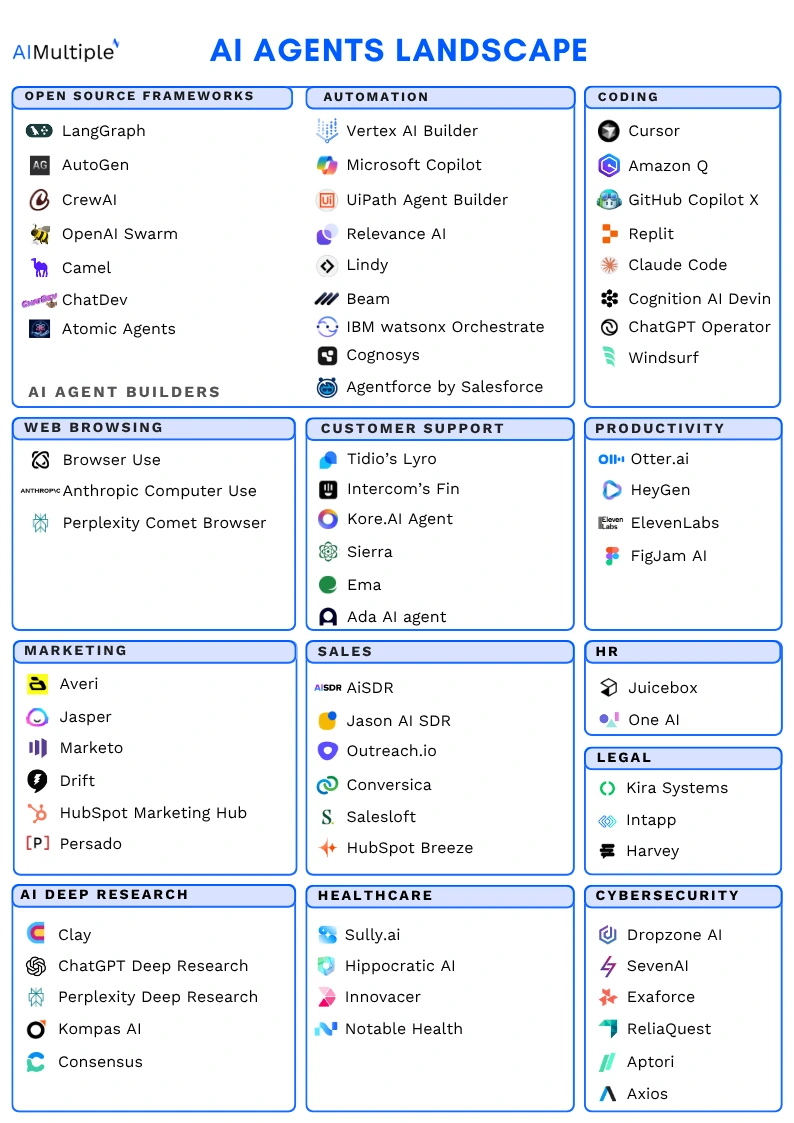
First: What Counts as a “Real” AI Agent?
For this list, an AI tool qualifies as an agent only if it can do at least three of the following:
- Work toward a goal, not just answer prompts
- Plan multiple steps on its own
- Use tools (browser, files, apps, APIs)
- Execute actions without constant input
- Adjust based on results
If it only chats, it’s not an agent.
Important Context (Read This Once)
Note: Agentic AI is evolving rapidly. All tools listed below are usable as of early 2026, but they vary significantly in autonomy, reliability, and required human supervision.
This framing is intentional. It keeps the article honest and future-proof.
Tier 1: Widely Usable AI Agents (Best for Most People)
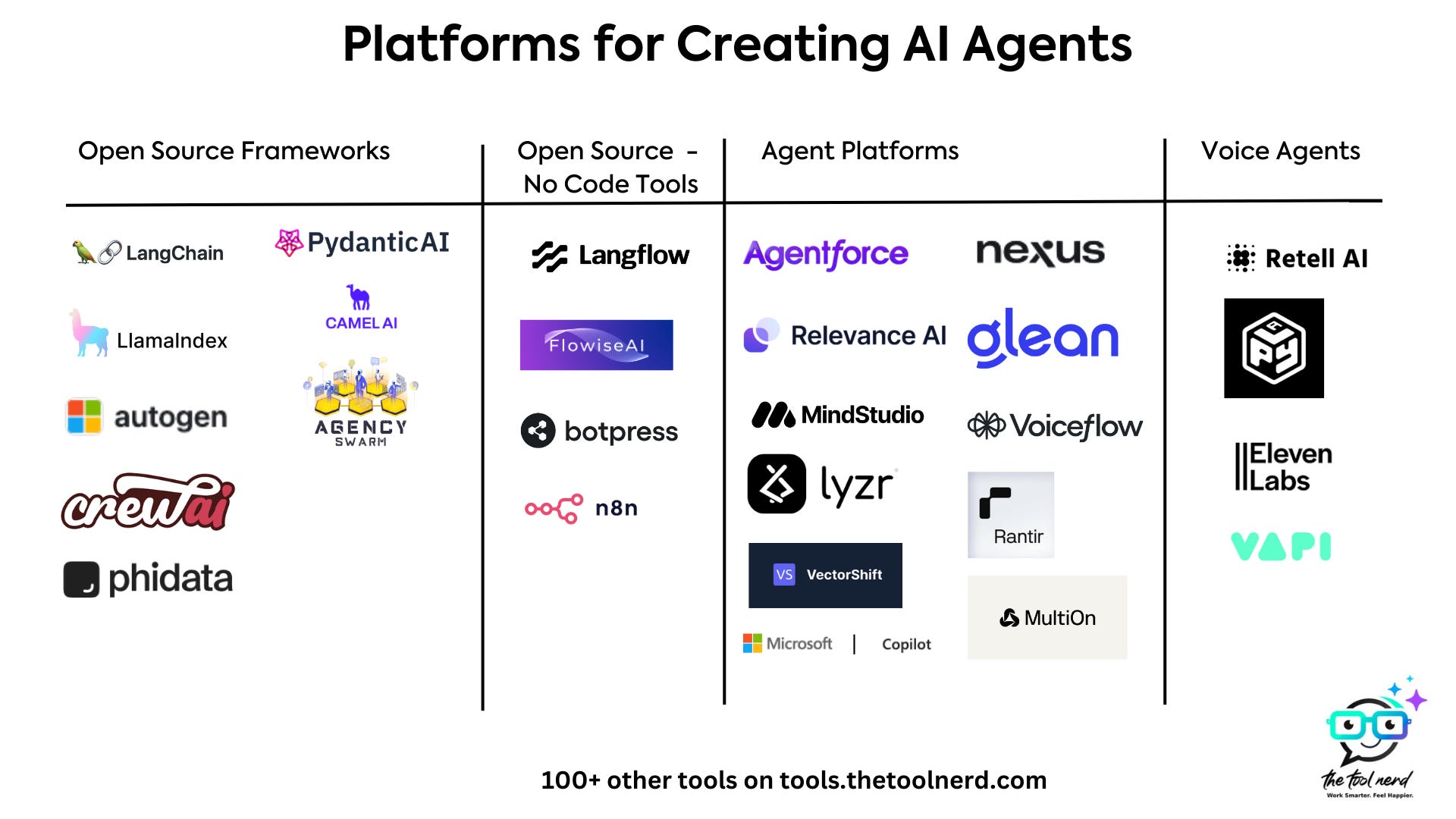
These are the most practical and stable agent experiences available right now.
1. ChatGPT Agents (OpenAI)
Best for: Research, writing, planning, general execution
Skill level: Beginner → Advanced
ChatGPT agents are the most accessible introduction to agentic AI.
They can:
- Plan multi-step tasks
- Browse the web
- Use files and tools
- Execute goal-based workflows
They are not fully autonomous—but when supervised, they’re extremely effective.
Use cases
- Research and reporting
- Content workflows
- Data analysis
- Structured task execution
Pros
- Integrated into ChatGPT
- Strong reasoning models
- Flexible across domains
Cons
- Requires supervision
- Still evolving
Best for: Individuals and teams already using ChatGPT daily.
2. Zapier Agents
Best for: Business automation
Skill level: Beginner → Intermediate
Zapier Agents combine AI reasoning with real app automation.
They can:
- Trigger workflows
- Monitor conditions
- Execute actions across thousands of apps
This makes them one of the most reliably useful agent systems for businesses.
Use cases
- CRM updates
- Lead handling
- Support automation
- Notifications and alerts
Pros
- Huge app ecosystem
- Stable execution
- Non-technical friendly
Cons
- Less flexible reasoning
- Subscription cost
Best for: Teams automating repeatable workflows.
3. Taskade AI Agents
Best for: Team planning and task execution
Skill level: Beginner
Taskade blends project management with AI agents that help plan, update, and execute tasks within workspaces.
Use cases
- Task breakdowns
- Documentation
- Team coordination
Pros
- Simple UI
- Collaboration-friendly
Cons
- Limited autonomy
Best for: Small teams and startups.
Tier 2: Powerful but Supervised Agents (Early but Real)
These agents show true agentic behavior, but require more oversight.
4. Manus AI
Best for: Autonomous task execution and research
Skill level: Intermediate
Manus is designed around execution, not conversation.
Given a goal, it can plan steps, use tools, and adapt actions as tasks progress. This places it closer to the agentic ideal than most tools labeled as “agents.”
Use cases
- Research and information gathering
- Multi-step operational tasks
- Workflow execution
Pros
- Strong goal-driven design
- Less prompt micromanagement
- Clearly agent-oriented
Cons
- Still evolving
- Limited transparency
- Requires careful supervision
Best for: Users who want AI to do the work, not just explain it.
5. Devin (AI Software Engineer)
Best for: Software development
Skill level: Professional
Devin is built specifically for engineering tasks.
It can:
- Read codebases
- Write and modify code
- Run tests
- Fix bugs
Pros
- True execution in dev workflows
- Strong domain focus
Cons
- Expensive
- Narrow scope
Best for: Engineering teams.
6. CrewAI
Best for: Multi-agent workflows
Skill level: Intermediate → Advanced
CrewAI lets you build teams of agents, each with a role (researcher, writer, reviewer).
Use cases
- Content pipelines
- Research workflows
Pros
- Clear role separation
- Powerful coordination
Cons
- Setup required
- Not plug-and-play
Best for: Advanced users building structured agent systems.
Tier 3: Developer & Experimental Agents (Educational, Not Plug-and-Play)
These are important historically and technically—but not for casual users.
7. Auto-GPT
Best for: Experimentation
Skill level: Advanced
Auto-GPT popularized autonomous agent loops. It’s powerful, but unstable without guardrails.
Pros
- Fully agentic by design
Cons - Can spiral
- Complex setup
8. LangGraph (LangChain)
Best for: Production-grade agent systems
Skill level: Advanced
LangGraph is for building controlled, stateful agents in real products.
Pros
- High control
- Scales well
Cons
- Developer-only
How to Choose the Right AI Agent
Ask yourself:
- Do I want execution or thinking support?
- Do I need plug-and-play or control?
- Is this personal or business-critical?
- How much supervision is acceptable?
More autonomy always means more responsibility.
The Real Risk With AI Agents
AI agents can:
- Make mistakes at scale
- Execute incorrect assumptions
- Misuse permissions
That’s why human-in-the-loop systems are still essential in 2026.
FAQs (Featured Snippet Ready)
What are the best AI agent tools in 2026?
The most usable AI agents in early 2026 include ChatGPT Agents, Zapier Agents, Manus AI, Devin, and CrewAI.
Are AI agents better than AI assistants?
Agents are better for execution-heavy tasks. Assistants are better for thinking, writing, and decision-making.
Can AI agents work without humans?
Not safely. Most effective setups still require human oversight.
Final Takeaway
Agentic AI is real—but uneven.
In January 2026, the advantage comes from:
- Knowing which agents actually execute
- Using them where they help
- Keeping humans responsible for outcomes
Used wisely, AI agents aren’t hype.
They’re leverage.
More on AI Agents & Agentic AI (2026)
- What Is Agentic AI? Explained Simply (2026)
- AI Agents in 2026: What They’re Good At, What They Break
- ChatGPT Agents vs AI Assistants: What’s the Difference?
- How to Set Up OpenClaw.ai: Complete Tutorial (2026)
- What Is Claude Cowork? Complete Beginner’s Guide (2026)
- Best Agentic AI Browsers to Watch in 2026