
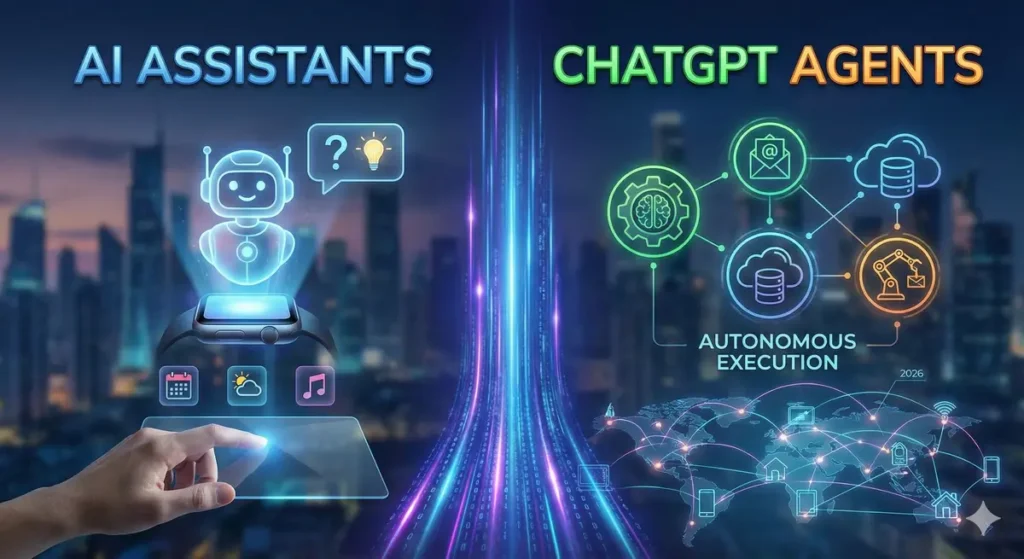

“AI assistant” and “AI agent” are often used interchangeably.
They shouldn’t be.
In 2026, the difference between the two shapes how useful an AI tool actually is. One responds. The other acts. If you don’t understand this distinction, it’s easy to overestimate what current tools can do—or underestimate where they’re heading.
This guide explains the difference between ChatGPT agents and traditional AI assistants, using plain language, real examples, and practical implications. No jargon. No hype.
Start With the Simple Distinction
Here’s the cleanest way to think about it:
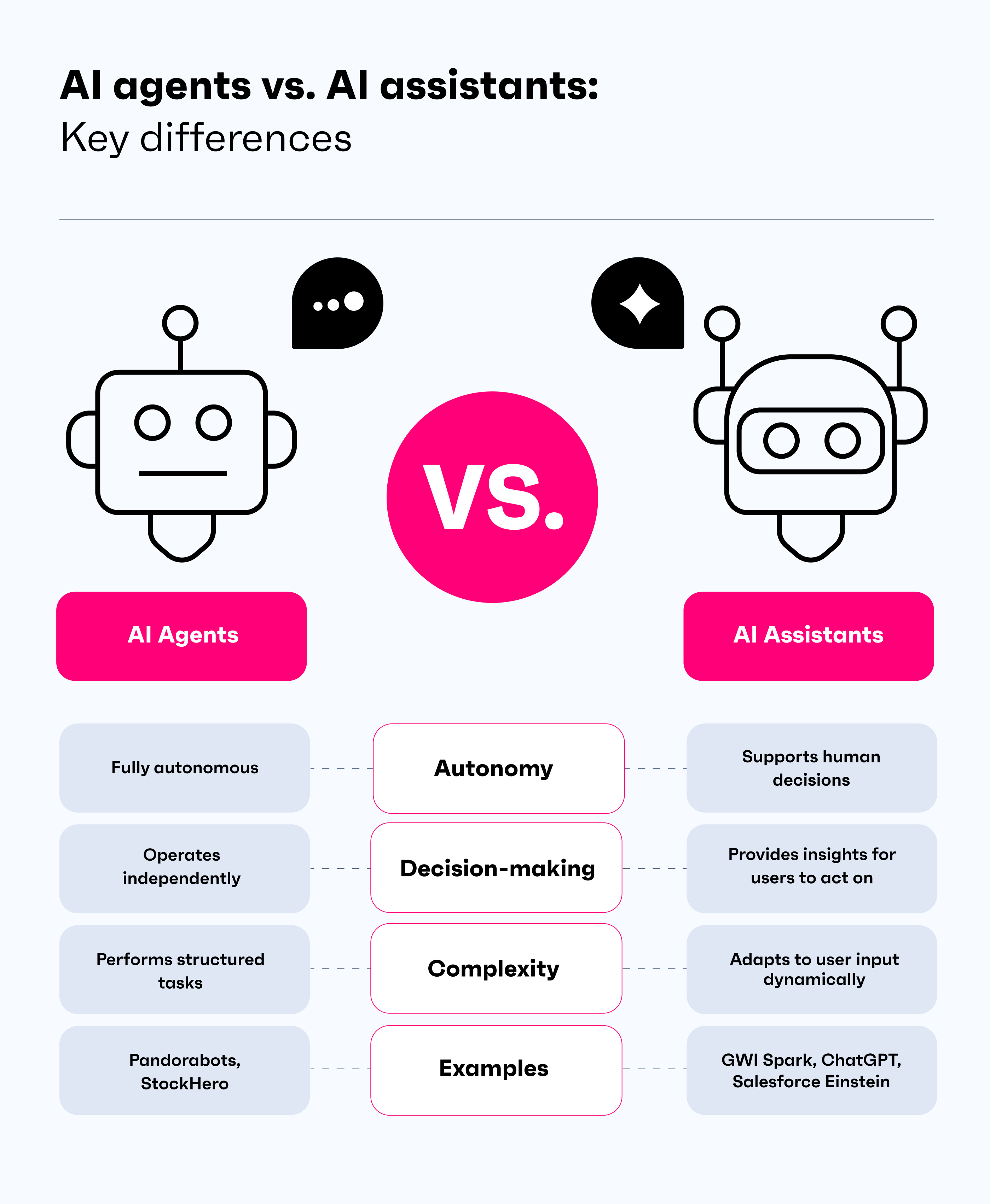
- AI assistant: helps you think and decide
- AI agent: helps you get things done
Assistants answer questions.
Agents pursue outcomes.
That difference matters more than model quality or prompt tricks.
What Is an AI Assistant?
An AI assistant is reactive.
It:
- Waits for your input
- Responds to a prompt
- Stops when the response is delivered
Common examples include chatbots that:
- Answer questions
- Draft text
- Summarize documents
- Explain concepts
ChatGPT, used in standard chat mode, is primarily an AI assistant.
It’s powerful—but it doesn’t act unless you tell it what to do, step by step.
What Is an AI Agent?
An AI agent is goal-driven.
It:
- Understands an objective
- Breaks it into steps
- Uses tools to act
- Monitors progress
- Adjusts based on results
Instead of replying once, an agent runs a loop until the task is done or fails.
This is the core idea behind agentic AI, explained in our guide on what agentic AI is and why it matters in 2026.
ChatGPT Agents: Where Things Get Confusing
ChatGPT is evolving.
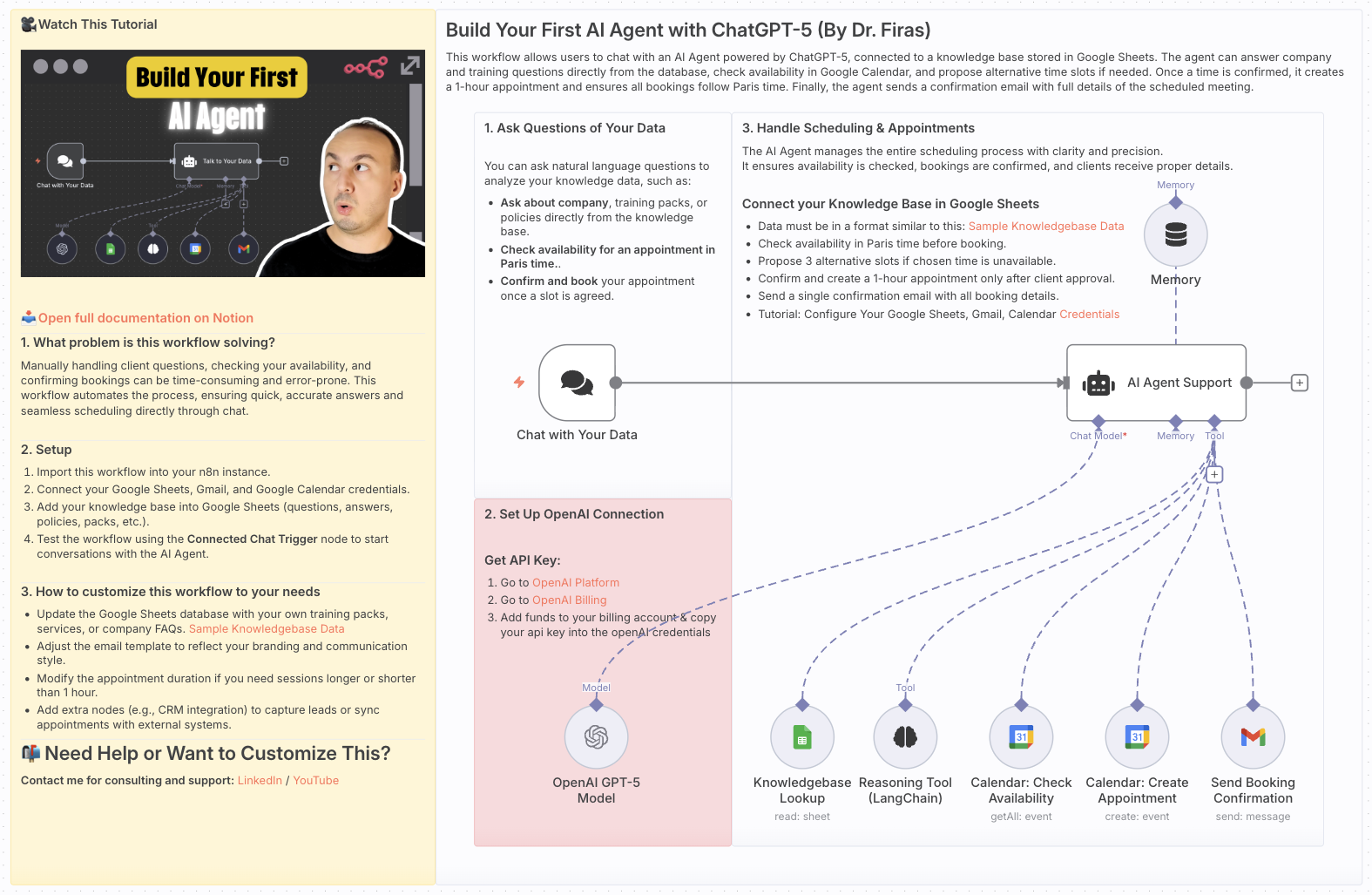
In 2026, ChatGPT includes agent-like capabilities through:
- Task-based tools
- Multi-step workflows
- Browser and file actions
- Ongoing task execution
But this doesn’t mean ChatGPT is always an agent.
ChatGPT can behave like an assistant or an agent depending on how it’s used and what features are enabled.
A Practical Comparison
| Capability | AI Assistant | ChatGPT Agent |
|---|---|---|
| Responds to prompts | ✅ | ✅ |
| Plans multi-step tasks | ❌ | ✅ |
| Uses tools automatically | ❌ | ✅ |
| Runs without constant input | ❌ | Partial |
| Goal-oriented behavior | ❌ | ✅ |
| Needs human supervision | High | Medium |
Assistants are conversational.
Agents are operational.
Real-World Examples
Example 1: Research Task
AI assistant
“Here’s how you could research competitors.”
ChatGPT agent
- Searches the web
- Collects sources
- Extracts key insights
- Compiles a summary
Same goal. Very different execution.
Example 2: Content Workflow
AI assistant
- Helps write an outline
- Edits paragraphs when asked
ChatGPT agent
- Tracks content goals
- Gathers reference material
- Drafts sections
- Revises based on feedback
This is the difference between helping and handling.
Example 3: Operations
AI assistant
- Explains how to automate a task
AI agent
- Connects tools
- Monitors triggers
- Executes actions over time
This is why agents matter in business contexts.
Why This Difference Matters in 2026
Understanding assistants vs agents helps you:
- Set realistic expectations
- Choose the right tools
- Avoid hype-driven marketing
- Design better workflows
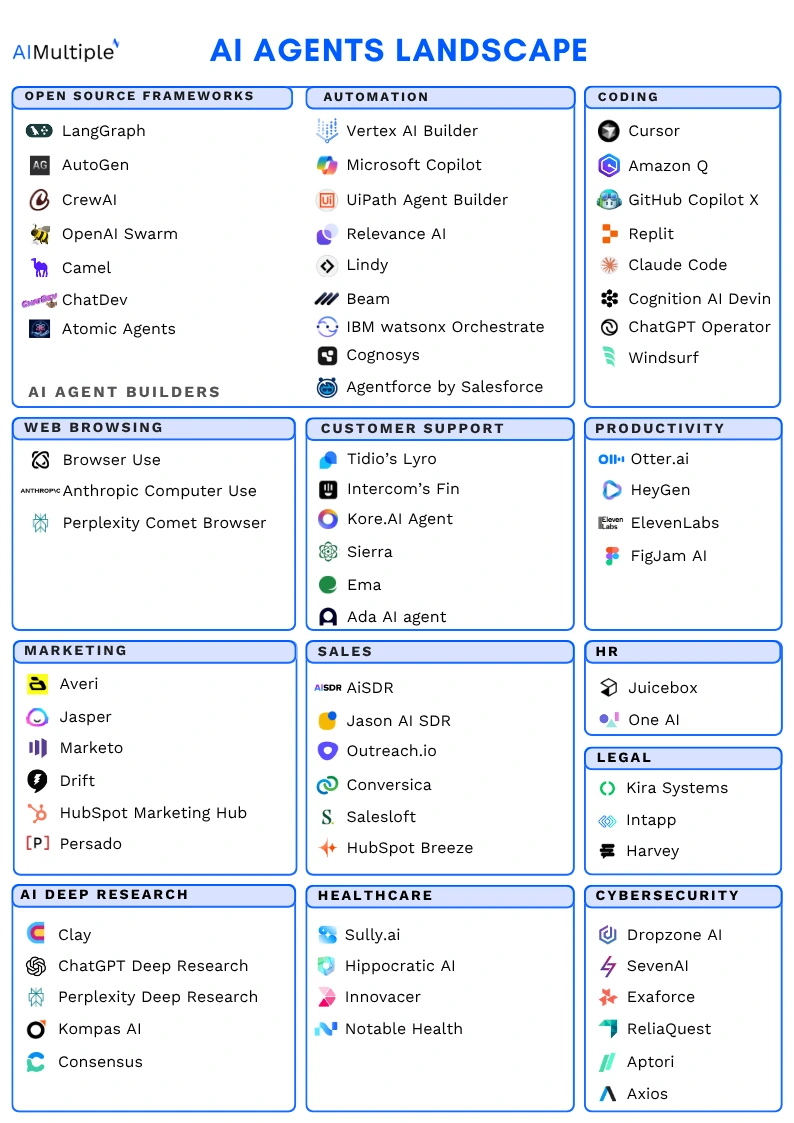
Many tools are marketed as “agents” but behave like assistants. Knowing the difference protects you from disappointment.
Are ChatGPT Agents Fully Autonomous?
No—and that’s important.
ChatGPT agents:
- Operate within permissions
- Require human oversight
- Can fail or misinterpret goals
- Should not run unsupervised in critical systems
In 2026, we’re in a human-in-the-loop phase. Agents assist execution, but humans remain responsible.
When an AI Assistant Is Actually Better
Agents aren’t always the answer.
Use an assistant when:
- You’re thinking through ideas
- Precision matters
- You need tight control
- Tasks are one-off
Agents shine in repeatable, multi-step workflows.
How ChatGPT Fits Into a Modern Workflow
Power users often combine:
- Voice Mode for thinking
- Canvas for writing
- Projects for context
- Agents for execution
This layered approach is explained in our guide on how ChatGPT Projects, Canvas, and Voice work together in 2026.
Agents don’t replace assistants—they extend them.
Common Misconceptions
- “Agents replace humans” → No
- “Agents are just better chatbots” → No
- “All AI tools are agents now” → Also no
Agentic behavior is a capability, not a default state.
FAQs
What is the difference between an AI assistant and an AI agent?
An AI assistant responds to prompts, while an AI agent can plan and execute multi-step actions toward a goal.
Are ChatGPT agents available now?
Some agent-like features exist in ChatGPT, but full autonomy is limited and supervised.
Do I need agents to use ChatGPT effectively?
No. Assistants are often better for thinking and writing. Agents help with execution-heavy tasks.
Final Takeaway
AI assistants help you think.
AI agents help you act.
In 2026, the most effective tools—and users—know when to use each. ChatGPT sits at the intersection, capable of both roles depending on how you work with it.
Understanding this difference now puts you ahead of the curve.
More on AI Agents & ChatGPT (2026)
- What Is Agentic AI? Explained Simply (2026)
- AI Agents in 2026: What They’re Good At, What They Break
- Best AI Agents You Can Use Right Now (2026)
- ChatGPT New Features March 2026: Every Update Explained
- Stop Using ChatGPT Like This (Do This Instead)
- How to Set Up OpenClaw.ai: Complete Tutorial (2026)
Say the word and I’ll write it next.