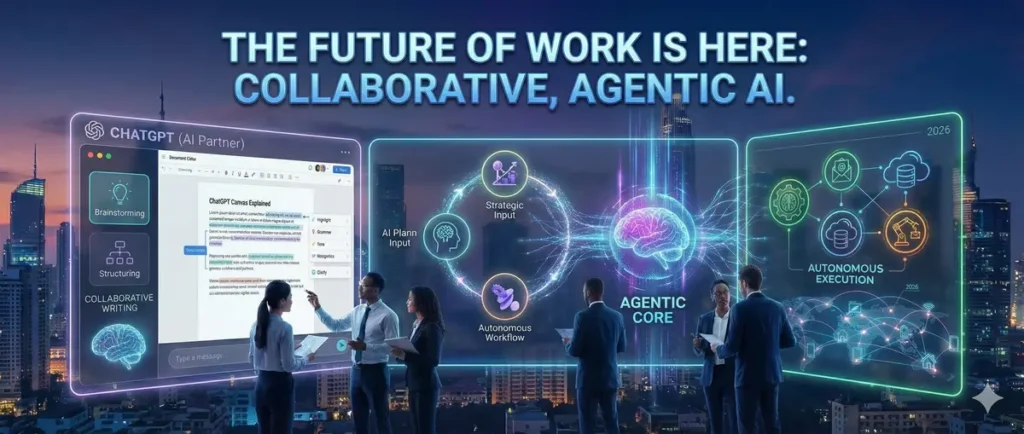

Agentic AI is one of those terms that sounds technical, vague, and overhyped—until you understand what it actually means.
In simple terms, agentic AI refers to AI systems that can plan, decide, and take actions to achieve goals, instead of just responding to prompts. This shift matters because it changes AI from something that talks into something that does.
In 2026, this distinction is becoming central to how AI tools are built, used, and evaluated. This guide explains what agentic AI is, how it works, how it’s different from regular AI assistants, and why it matters for everyday users—not just researchers.
No hype. No jargon. Just clarity.
What Is Agentic AI?
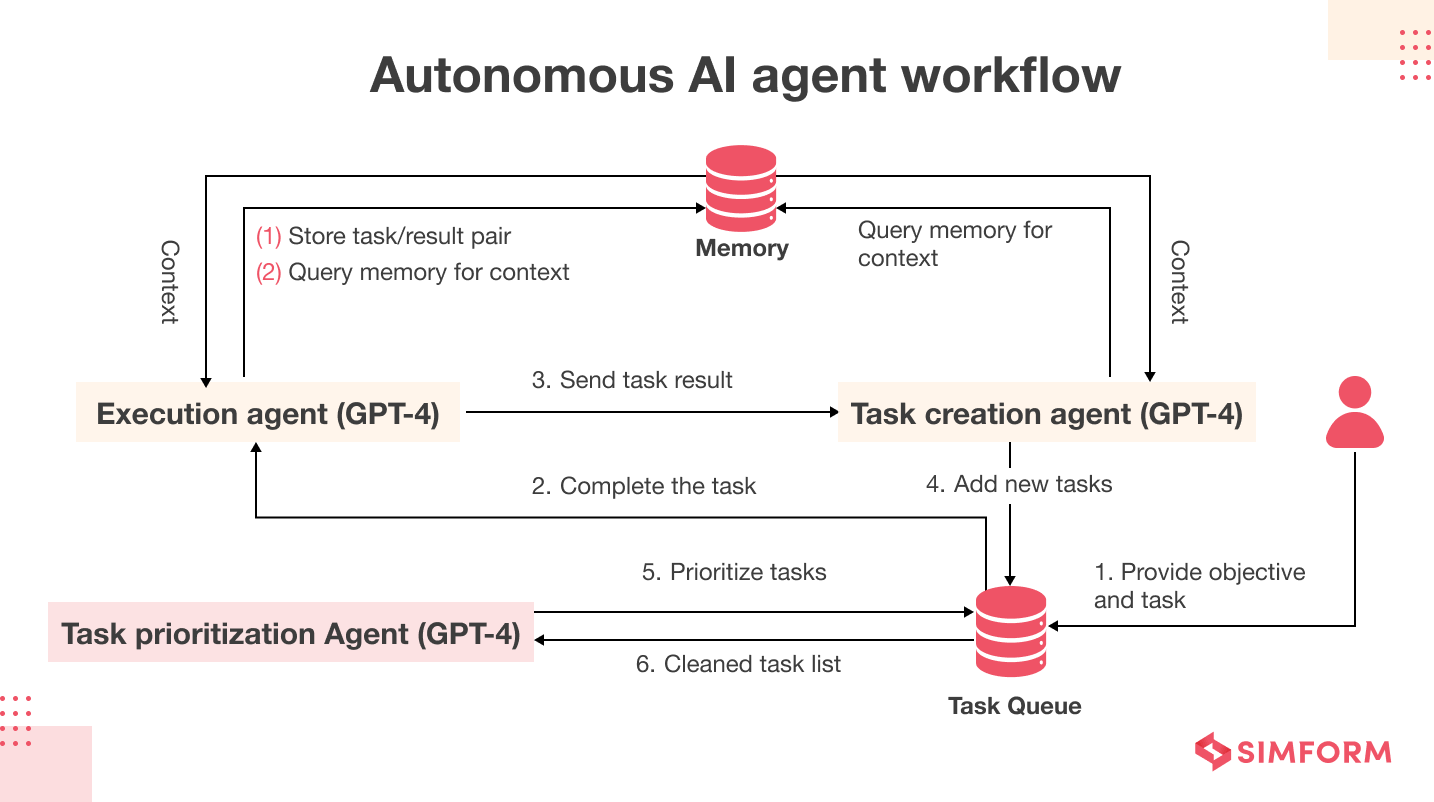
Agentic AI describes AI systems designed to act with a degree of autonomy.
Instead of waiting for a single instruction and replying, an agentic system can:
- Understand a goal
- Break it into steps
- Decide what to do next
- Take actions across tools or environments
- Adjust based on results
The key idea is agency—the ability to act toward an objective.
A chatbot answers questions.
An agentic AI pursues outcomes.
A Simple Way to Think About It
Here’s a practical comparison:
- AI assistant: “Here’s how you could do this.”
- Agentic AI: “I’ll do this for you.”
For example:
- An assistant explains how to research competitors
- An agent researches them, summarizes findings, and updates a document
That difference is small on the surface—but massive in impact.
How Agentic AI Works (Without the Technical Headache)

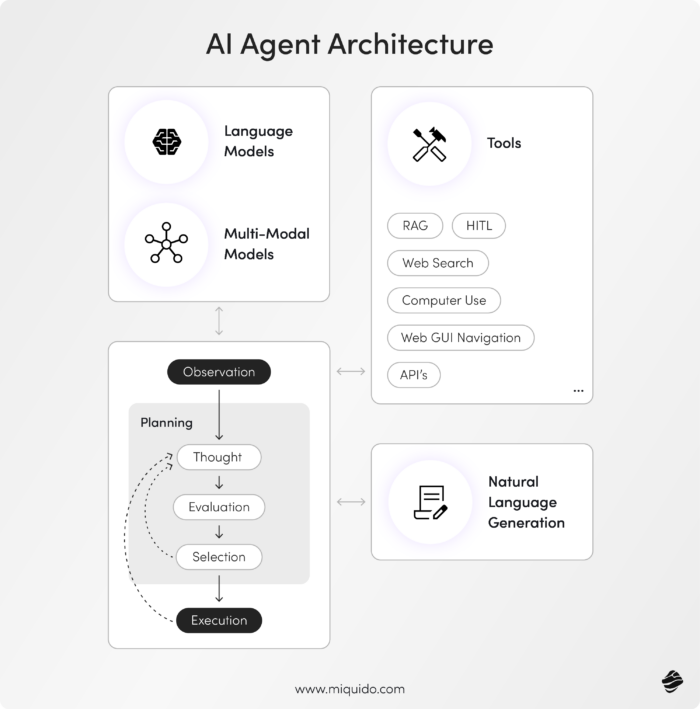
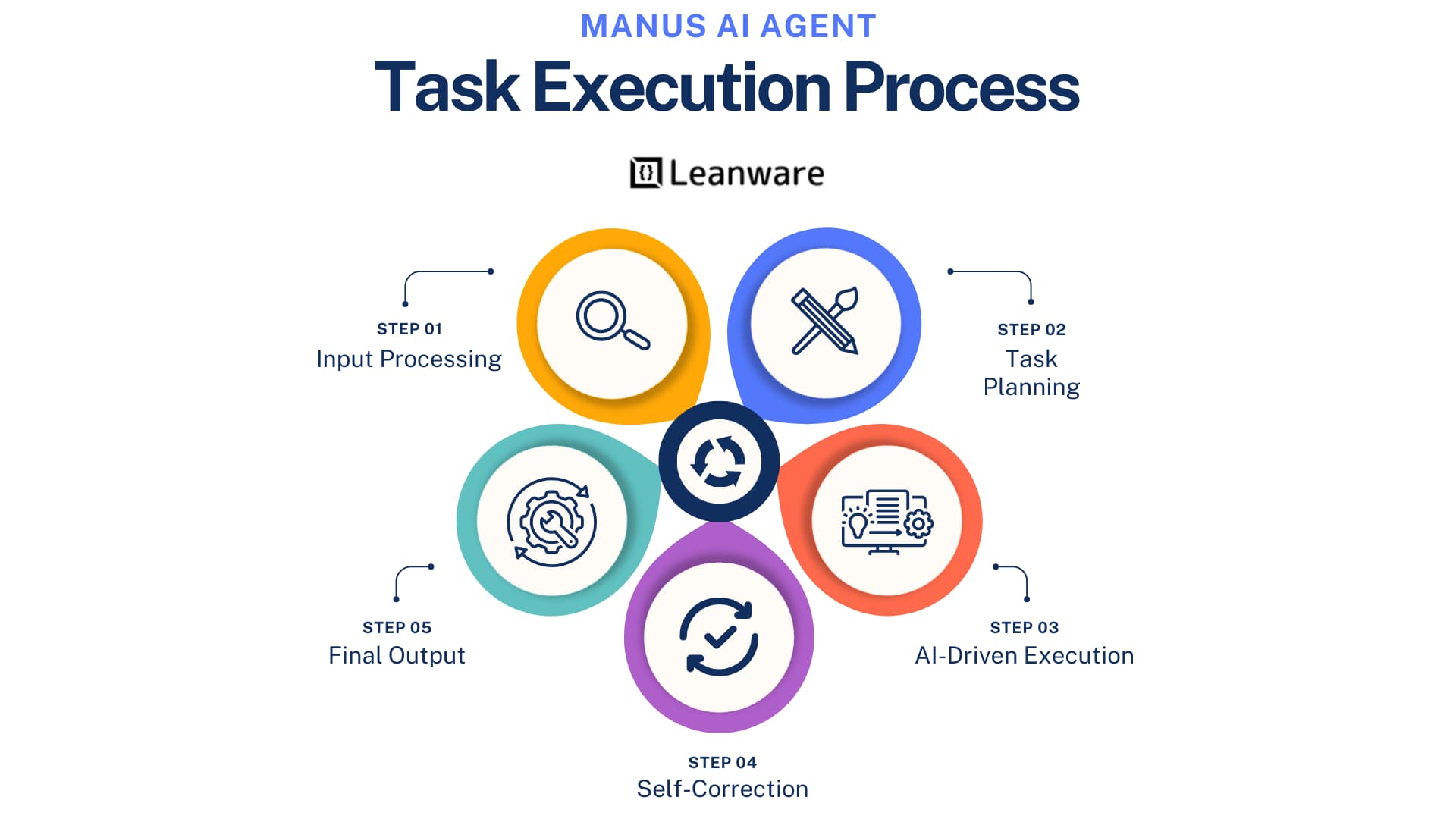
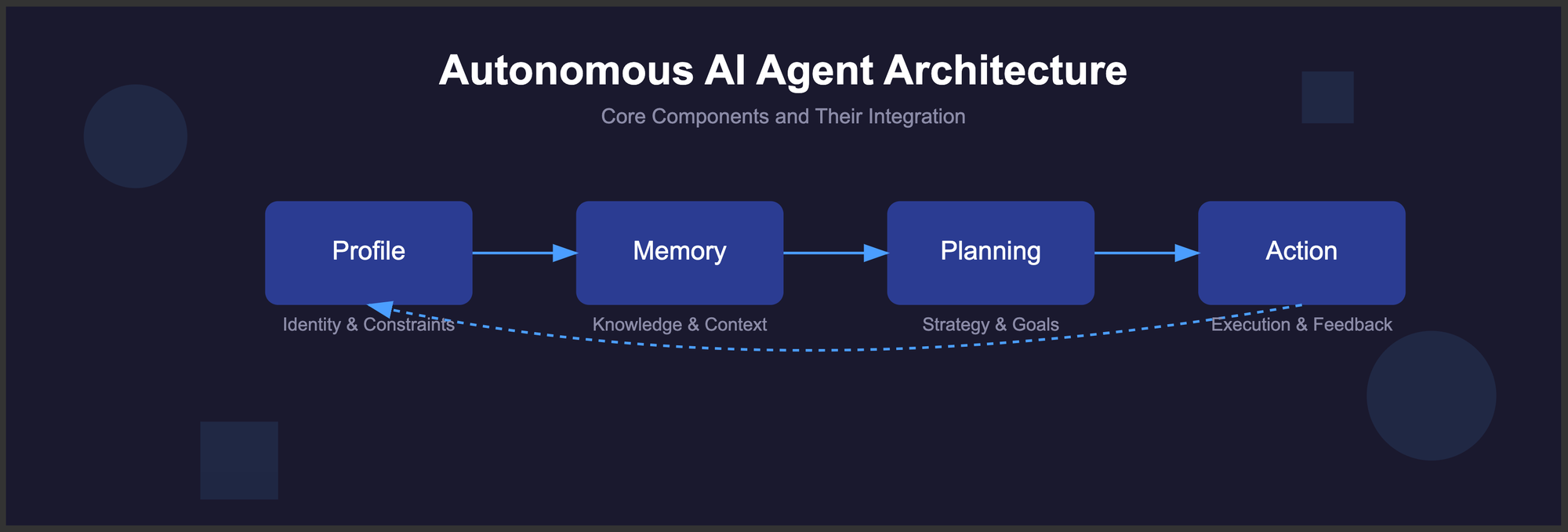
Most agentic systems follow a loop:
- Goal definition
The agent knows what it’s trying to achieve. - Planning
It breaks the goal into steps. - Action
It uses tools (APIs, browsers, files, apps). - Observation
It checks what happened. - Adjustment
It decides what to do next.
This loop repeats until the goal is complete—or fails.
You don’t need to see this loop. You just experience the result: work getting done.
Why Agentic AI Matters in 2026
Agentic AI matters because it removes friction between intention and execution.
Instead of:
- Thinking
- Planning
- Switching tools
- Executing manually
You increasingly:
- Set a goal
- Supervise progress
- Review outcomes
This has major implications for productivity, software design, and how humans work with machines.
Real-World Examples of Agentic AI
Agentic AI isn’t science fiction. You’re already seeing early versions.
1. AI Agents That Research and Report
An agent can:
- Search the web
- Read multiple sources
- Extract key points
- Compile a summary
This goes beyond “search and answer.”
2. Agents That Automate Workflows
Some agents can:
- Monitor inboxes
- Categorize requests
- Create tasks
- Trigger follow-up actions
The agent doesn’t just suggest—it executes.
3. Coding and Dev Agents
In development tools, agents can:
- Read a codebase
- Identify bugs
- Propose fixes
- Run tests
Human oversight remains—but the workload shifts dramatically.
Agentic AI vs Traditional AI Assistants
| Feature | AI Assistant | Agentic AI |
|---|---|---|
| Goal-driven | ❌ | ✅ |
| Multi-step planning | ❌ | ✅ |
| Tool usage | Limited | Extensive |
| Autonomy | Low | Higher |
| Human supervision | Constant | Periodic |
This doesn’t mean assistants disappear. It means roles diverge.
What Agentic AI Is Not
It’s important to be clear.
Agentic AI is not:
- Fully independent intelligence
- Conscious or self-aware
- Free from human oversight
- Perfect or risk-free
Agents operate within constraints, permissions, and safeguards. They are tools—not replacements for judgment.
Risks and Limitations of Agentic AI
More autonomy introduces new challenges.
Key concerns include:
- Error propagation across steps
- Tool misuse if permissions are too broad
- Over-reliance without verification
- Difficulty tracing decision paths
This is why human-in-the-loop systems are still essential in 2026.
How Agentic AI Fits Into ChatGPT’s Evolution
ChatGPT’s movement toward agents reflects this broader trend.
Instead of only:
- Explaining
- Writing
- Summarizing
ChatGPT is evolving toward:
- Planning
- Acting
- Monitoring
- Iterating
If you’ve read our guide on how to use ChatGPT in 2026, you’ve already seen early signs of this shift.
Who Should Care About Agentic AI?
Agentic AI isn’t just for developers.
It matters to:
- Professionals automating workflows
- Founders building lean operations
- Teams reducing repetitive work
- Anyone curious about where AI is headed
Understanding agents now gives you a head start as tools mature.
FAQs (Featured Snippet Optimized)
What is agentic AI in simple terms?
Agentic AI refers to AI systems that can plan and take actions to achieve goals, rather than only responding to prompts.
How is agentic AI different from chatbots?
Chatbots respond to questions. Agentic AI systems pursue outcomes through multi-step actions.
Is agentic AI dangerous?
Agentic AI introduces new risks if poorly designed, but current systems operate with safeguards and human oversight.
Can ChatGPT use agentic AI?
ChatGPT is beginning to incorporate agent-like capabilities, especially through tools and task-based features.
Final Takeaway
Agentic AI marks a shift from AI as a responder to AI as an actor.
In 2026, this transition is still early—but it’s foundational. Understanding agentic AI now helps you evaluate tools, avoid hype, and prepare for workflows where AI doesn’t just assist, but executes.
This isn’t about replacing humans.
It’s about redefining what machines do for humans.
More on AI Agents & Agentic AI (2026)
- AI Agents in 2026: What They’re Good At, What They Break
- Best AI Agents You Can Use Right Now (2026)
- ChatGPT Agents vs AI Assistants: What’s the Difference?
- How to Set Up OpenClaw.ai: Complete Tutorial (2026)
- OpenClaw VPS Setup: Run Your AI Agent 24/7
- What Is Claude Cowork? Complete Beginner’s Guide (2026)