

January 22, 2026
Something strange happened over the holidays.
While most people were unwrapping gifts and nursing their third cup of eggnog, a different kind of unwrapping was happening in developer communities worldwide. Twitter feeds exploded. Discord servers lit up. GitHub issue threads went into overdrive. And at the center of it all was Claude Code—a command-line tool that somehow made seasoned engineers feel like they’d been handed alien technology.
“I’ve never felt this much behind as a programmer,” confessed Andrej Karpathy, one of AI’s most respected figures. “Clearly some powerful alien tool was handed around except it comes with no manual.”
That’s the thing about January 2026’s hottest AI story. It’s not just about a tool getting better. It’s about the moment when something crosses an invisible line—when incremental improvements suddenly tip into something that feels fundamentally different.
The “Is This AGI?” Moment

Here’s what happened when Jaana Dogan, a senior engineer at Google, gave Claude Code a try: she described a problem to it, and it generated in one hour what her team had spent a year building.
“I’m not joking and this isn’t funny,” she posted, a line that quickly became a meme precisely because it captured that mix of awe and existential unease so many developers were feeling.
We’ve had AI coding assistants for years now. GitHub Copilot autocompletes your code. ChatGPT can write functions. So why is Claude Code different? Why are people asking “Is this AGI?” when it’s really just… code?
Because it’s not just code anymore.
What Changed (And Why It Matters to Everyone)
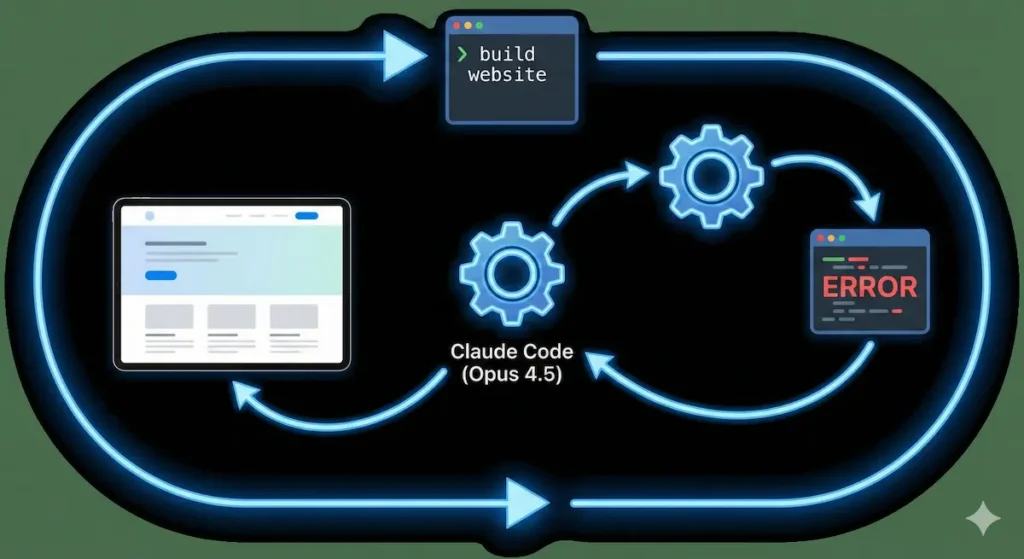
Think back to early AI coding tools. They were impressive, sure, but they were like having a really smart intern. You’d ask them to do something, they’d take a crack at it, and then you’d spend hours fixing their mistakes and explaining what you actually meant.
Claude Code with Opus 4.5 changed the equation. It doesn’t just write code—it thinks in code. It closes the feedback loop. It looks at what it built, sees what broke, and fixes it. Then it keeps going.
Dan Shipper, CEO of Every, put it perfectly: “You just tell it to do something, and it works.” He calls it an “infinite vibe coding machine.”
But here’s the kicker that non-technical folks need to understand: this isn’t just about coding anymore.
Sure, Claude Code lives in your terminal and writes Python and TypeScript. But what it’s really doing is automating thought work. It’s reformatting spreadsheets. Writing research reports. Building personal websites. Creating custom dashboards. Syncing your apps. Managing your files.
One developer used it to build a full MIDI mixer as a terminal app, written in Rust—a notoriously complex language—just to see if it could.
It could.
The Economics Nobody Saw Coming

Let’s talk about what happened in Seattle last Thursday. Over 150 software engineers packed a meetup to share their Claude Code stories. Not online—in person. In January. In Seattle.
Johnny Leung, a Stripe engineer, described how his entire mental model of being a developer had shifted: “It’s kind of evolving the mentality from just writing code to becoming like an architect, almost like a product manager.”
Think about that. The skill isn’t coding anymore. The skill is knowing what you want.
Noah Brier, who’s been using large language models since before ChatGPT existed, explained it on Bloomberg’s podcast: traditional SaaS companies are getting destroyed in the stock market because of tools like Claude Code. Why? Because the barrier to building custom software just collapsed.
Need a CRM that works exactly how you want? Claude Code can build it. Need to automate your invoicing in a specific way? Claude Code can do it. That expensive enterprise software subscription you’re paying for? You might not need it anymore.
This is where it gets real for everyone, not just engineers. The “two-tier economy” that’s emerging won’t be about who can code. It’ll be about who can clearly specify what they want built.
As one commenter noted: “The bottleneck is shifting from ‘can you execute’ to ‘do you know what you actually want.’ That’s a much stranger skill gap.”
The January 2026 Reckoning
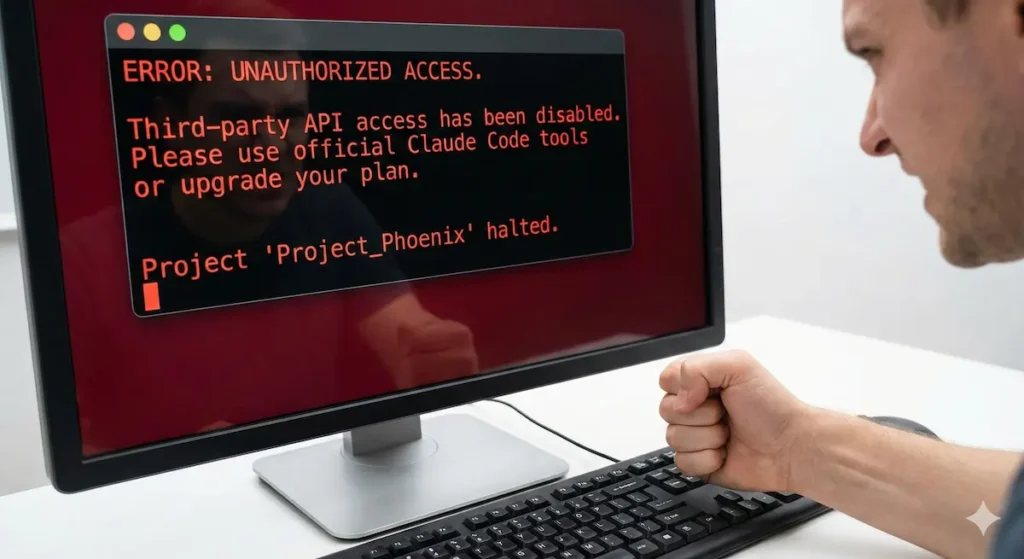
But this wouldn’t be a complete January 2026 Claude Code story without talking about the controversy that exploded in the second week of the month.
Here’s what happened: developers had discovered a beautiful loophole. Claude Max subscription (around $200/month) gave you unlimited access through Claude Code’s official terminal tool. But clever developers figured out they could use that same subscription with OpenCode—an open-source alternative that many preferred for its smoother interface and better features.
It was the perfect arbitrage. Flat-rate pricing for what would otherwise cost thousands in API usage. Autonomous coding loops running overnight while you slept. The economics were too good to be true.
Which, of course, meant they were.
On January 9 at 2:20 AM UTC, Anthropic flipped a switch. Third-party tools stopped working. No warning. No migration path. Just error messages.
The backlash was immediate and intense. DHH (creator of Ruby on Rails) called it “very customer hostile.” Developers who’d just upgraded their subscriptions days earlier found themselves locked out mid-project. GitHub issues filled with hundreds of angry comments.
“Using CC [Claude Code] is like going back to stone age,” wrote one user before canceling their $200/month subscription entirely.
Others defended Anthropic, comparing the situation to an all-you-can-eat buffet that works when most customers eat moderately but collapses when everyone shows up with industrial-sized containers.
The truth, as always, is more nuanced. Heavy users were burning through computational resources that would cost $1,000+ per month on metered API billing. YC hackathon teams were shipping six repositories overnight for $297 in API costs. That’s not sustainable economics for any company.
The Ralph Wiggum Effect
There’s a technical detail here that matters: the “Ralph Wiggum” technique that went viral in late December.
Named after the dim-witted Simpsons character, this plugin enabled a “brute force” approach to coding. Claude Code would write code, test it, see what failed, and feed that failure back into its context until it got things right. It was autonomous. It was powerful. And it could run for hours while you slept.
One developer described it as getting results that “felt surprisingly close to AGI.”
The problem? When thousands of developers started running autonomous overnight loops, Anthropic’s infrastructure costs exploded. The flat-rate subscription model that seemed generous suddenly looked unsustainable.
What Actually Happens Next
So where does this leave us?
First, let’s be clear: Claude Code isn’t going anywhere. If anything, it’s accelerating. Boris Cherny, the lead developer on Claude Code, revealed that in the last thirty days, 100% of his contributions to the tool—40,000 lines of new code—were written by Claude Code itself.
Read that again. The tool is now improving itself.
Second, the economics are evolving. The era of subscription arbitrage is over, but that doesn’t mean the capabilities disappear. Developers are adapting. Some are using official API keys. Others are exploring alternatives like OpenCode with ChatGPT Plus support, which shipped within hours of the Anthropic lockdown. The market is bifurcating into those who want open-source flexibility and those who’ll pay for proprietary polish.
Third—and this is what keeps people up at night—we’re watching the beginning of something much bigger than a coding tool.
The Real Story Nobody’s Telling
Here’s what struck me most while researching this piece: the emotional whiplash.
Read the quotes from developers in early January: “game-changer,” “never felt this much behind,” “powerful alien tool,” “closest thing to AGI I’ve felt.” There’s genuine awe there. Wonder. Excitement about possibilities.
Then read the quotes from mid-January after the OpenCode lockdown: “customer hostile,” “going back to stone age,” “speedrunning the journey from forgivable startup to loathsome corporation.”
Same tool. Same company. Two weeks apart.
This is the actual human experience of living through rapid technological change. It’s not a smooth curve of progress. It’s a rollercoaster of excitement, frustration, breakthrough, and disappointment—sometimes all in the same afternoon.
People built workflows around Claude Code. They rearranged how they thought about their jobs. They invested time learning new skills. Then some found themselves locked out of the tools they’d built their processes around, mid-project, with no warning.
That’s not just about technology. That’s about trust. About expectations. About the implicit social contract between tool-makers and tool-users.
Why This Matters to You
Maybe you’re not a developer. Maybe you’ve never opened a terminal window in your life. Why should you care about Claude Code drama?
Because this is a preview.
What happened with Claude Code in January 2026 is going to happen in your industry. Maybe it already is.
AI tools are going to cross capability lines you didn’t know existed. They’re going to make you feel simultaneously more powerful and more obsolete. They’re going to let you do in an hour what used to take weeks—then change their pricing or terms in ways that disrupt the workflows you built.
The skills that matter are shifting from execution to intention. From “can you do it” to “do you know what you want.”
And the companies building these tools are grappling, in real-time, with impossible economics and angry customers and capabilities that even they didn’t fully predict.
The Question Nobody Can Answer
At that Seattle meetup, a product engineer demoed an app that automatically fixed front-end bugs by having Claude Code control a browser. It worked. It was impressive. It was also the kind of thing that makes you think about all the entry-level developer jobs that involve exactly that kind of work.
In the comments section of one viral article about Claude Code, someone wrote: “Wonderful to know that this is all possible, but as someone who’s currently trying to transition into operations, I’m concerned that this would wipe out the bottom rung of that career ladder.”
That concern is legitimate. It deserves more than a dismissive “just learn to code” (which now apparently means “just learn to tell Claude Code what to build”).
But here’s the uncomfortable truth: we don’t actually know what happens next.
Will Claude Code democratize software creation, letting anyone with a clear idea build the tools they need? Or will it concentrate power among those who already know how to wield these tools effectively?
Will it eliminate jobs or create new ones? Will it make work more fulfilling or more precarious?
The honest answer is: probably all of the above, in ways we can’t predict, for different people, in different contexts.
Living in the Liminal Space
What makes the Claude Code story compelling isn’t that it’s a clear triumph or disaster. It’s that we’re living in the weird liminal space where both are true simultaneously.
It’s a tool that can rebuild a year’s worth of architectural work in an hour—and also lock you out of your workflow with no warning.
It’s technology that makes some people feel like they’ve touched the future—and others feel like they’re watching their profession dissolve.
It’s a moment where the question “Is this AGI?” gets asked seriously, even though we all kind of know the answer is “not quite, but close enough to be unsettling.”
Boris Cherny wrote recently: “Claude Code is not AGI. But for the first time, I can viscerally feel that truly transformative capabilities are within touching distance.”
That’s the feeling, isn’t it? That we’re close to something. That the hypotheticals that underpin AI policy debates—mass unemployment, the end of knowledge work as we know it—no longer feel hypothetical.
What You Can Actually Do
If you’re a developer: experiment, but don’t bet your career on any single tool’s pricing model staying the same. Build your workflows to be tool-agnostic where possible. Learn to articulate what you want clearly—that skill will outlast any particular implementation.
If you’re not a developer: pay attention anyway. The shift from “can you execute” to “do you know what you want” is coming for every knowledge work profession. Start practicing how to specify intent clearly. Get comfortable with tools that automate parts of your work. The question isn’t whether to engage but how thoughtfully.
If you’re building these tools: remember that your users aren’t just feature requests and API calls. They’re people building their livelihoods around what you create. Sudden changes break more than workflows—they break trust. And trust, once lost, is much harder to rebuild than a codebase.
The Sharable Truth
Here’s what I want you to take away from the Claude Code moment of January 2026:
We’re living through genuine capability breakthroughs that feel like science fiction, and they’re arriving faster than we can process their implications.
That’s exciting. That’s terrifying. That’s real.
The tools are getting powerful enough that they’re forcing us to confront questions we’ve been comfortable leaving abstract: What is work? What gives it meaning? Who gets to participate in creation? What happens to those who can’t keep up?
Claude Code didn’t answer those questions. It just made them urgent.
And maybe that’s the most important thing it could do.
Useful Resources
- Official Claude Code Documentation: https://docs.claude.com
- Claude Code GitHub: https://github.com/anthropics/claude-code
- Anthropic’s Economic Index Report (January 2026): Detailed analysis of how Claude is affecting different professions and tasks
- Seattle Claude Code Meetup Insights: GeekWire Coverage
- “Claude Code is about so much more than coding”: Transformer Newsletter
- Bloomberg’s “Why the Tech World Is Going Crazy for Claude Code”: In-depth podcast with Noah Brier
- Non-Technical Claude Code Guide: Department of Product
More AI Tools for Developers (2026)
- Best AI for Coding 2026: Claude Code vs Cursor vs Copilot
- How to Set Up OpenClaw.ai: Complete Tutorial (2026)
- How to Build Custom MCP Servers (2026)
- ChatGPT vs Claude vs Gemini vs Perplexity (2026)
- What Is Agentic AI? Explained Simply (2026)
- Best AI Jobs for Beginners (2025)
Have your own Claude Code story? The conversation is just getting started.