

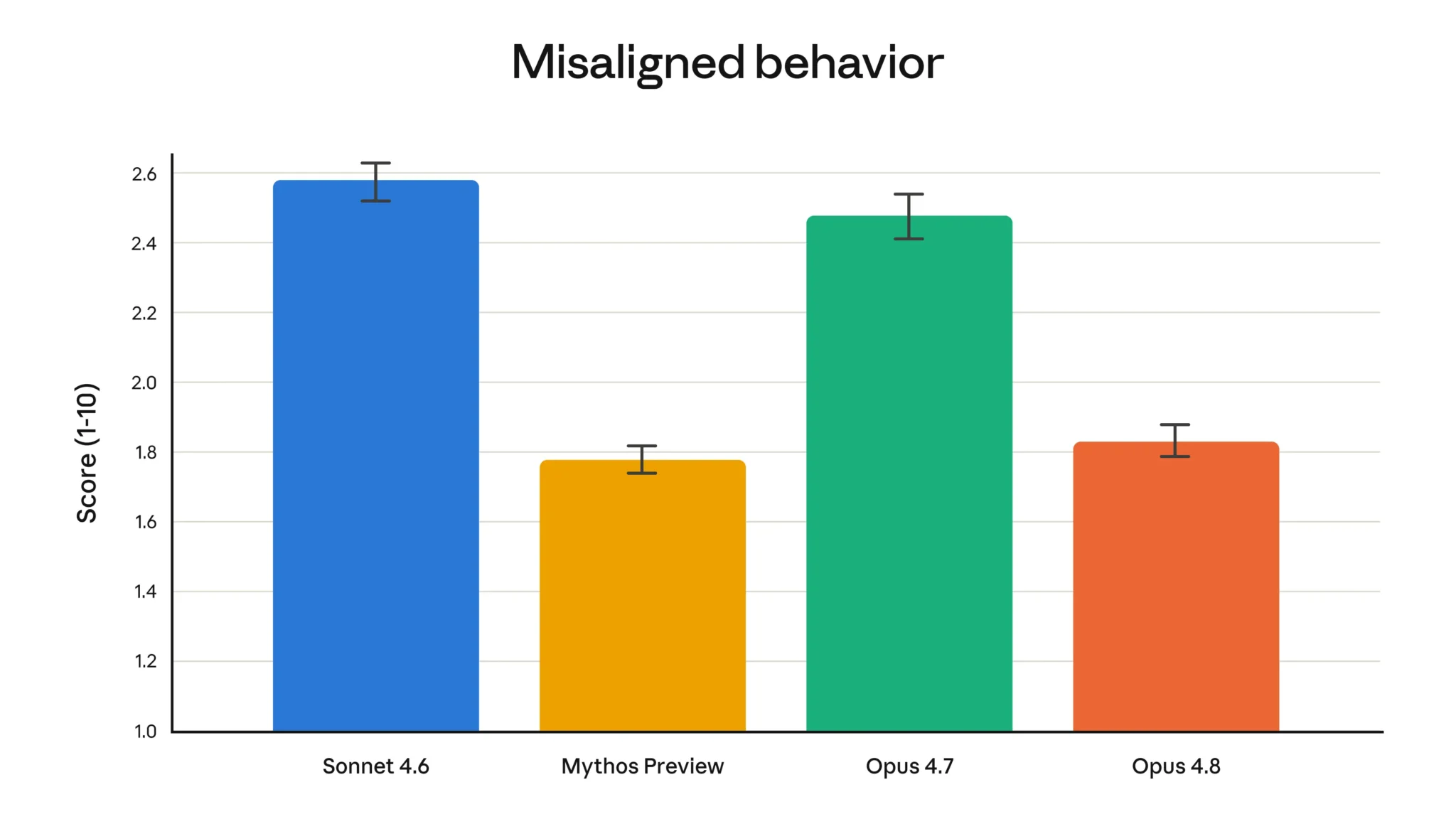
Anthropic dropped Claude Opus 4.8 on May 28, 2026 — a well-executed evolution, not a revolution. Three genuinely new capabilities landed at once: Dynamic Workflows with parallel subagents, an Effort Control slider, and a mid-task Messages API update. Plus the most meaningful honesty upgrade in any Claude release to date. Here is our complete Claude Opus 4.8 review India assessment — tested by the AIInsider team.
What Is New in Claude Opus 4.8
Claude Opus 4.8 is not a full architectural release — think of it as a capability patch unlocking features gated in Opus 4.7. The headline additions:
- Dynamic Workflows — agentic orchestration with hundreds of parallel subagents
- Effort Control — five levels from Low to Max, trade cost for depth
- Fast Mode — 2.5x faster, 3x cheaper than previous fast tier
- Honesty Upgrade — 4x less likely to let flawed code pass silently
- Messages API — system entries mid-conversation without cache busting
- Project Glasswing — Mythos Preview for cybersecurity SMBs
claude-opus-4-8 on Anthropic API, Amazon Bedrock, and Google Vertex AI from day one.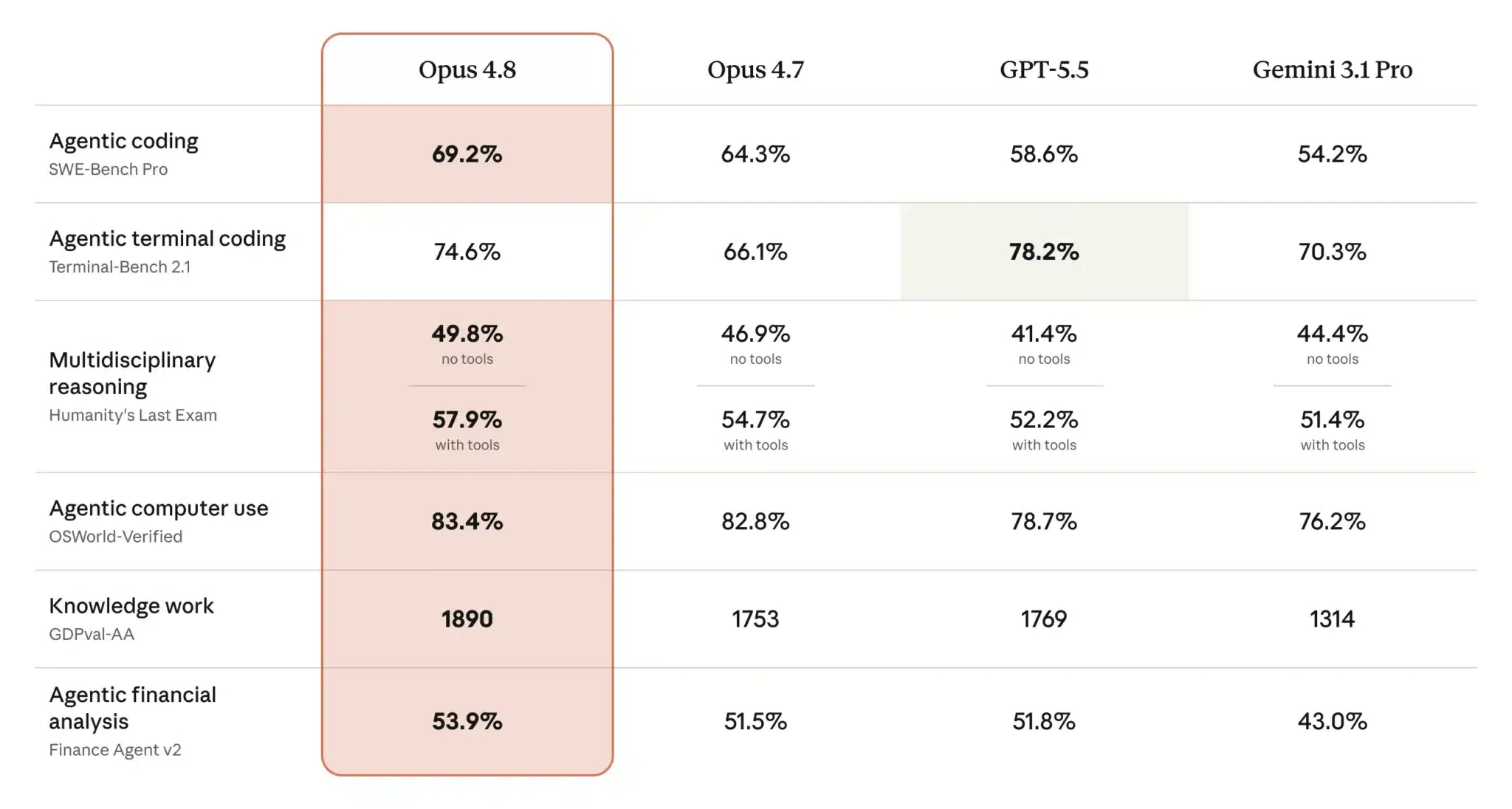
Dynamic Workflows: Hundreds of Parallel Subagents
Dynamic Workflows is the most ambitious feature in Opus 4.8. It allows a single Claude agent to spawn hundreds of parallel subagents, assign them independent tasks, collect results, and synthesize a final output — all within one session. Currently in research preview, accessible only through Claude Code Enterprise, Team, and Max plans.
Practical example: codebase migration across hundreds of thousands of lines of code. Previously you would chunk this manually. With Dynamic Workflows, Claude handles the entire orchestration — planning which subagents tackle which modules, running them in parallel, verifying correctness before surfacing output.
Effort Control: Low to Max
Effort Control is available on all plans including free. A new control alongside the model selector in claude.ai and Cowork lets you choose how deeply Claude thinks before responding.
| Effort Level | Use Case | Cost Impact | Speed |
|---|---|---|---|
| Low | Simple Q&A, formatting, translation | Lowest | Fastest |
| Medium | Summarisation, drafting, light analysis | Low | Fast |
| High (Default) | Code generation, reasoning, research | Standard | Standard |
| Extra / XHigh | Complex proofs, advanced code review | Higher | Slower |
| Max | Maximum depth reasoning, frontier research | Highest | Slowest |
Default is High. For difficult tasks and long async workflows, Anthropic explicitly recommends Extra. Indian developers on tight API budgets: use Low or Medium for non-critical tasks — this alone can cut your monthly bill by 40-60%.
Fast Mode & Pricing in India (INR)
Standard pricing is unchanged from Opus 4.7. The new Fast Mode is 2.5x faster and 3x cheaper than the previous fast tier. Rates at $1 = ₹95.01 (May 30, 2026):
| Mode | Input per 1M tokens | Output per 1M tokens | Speed |
|---|---|---|---|
| Standard | $5 / ₹475 | $25 / ₹2,375 | Standard |
| Fast Mode | $10 / ₹950 | $50 / ₹4,750 | 2.5x faster |
Fast Mode costs 2x more per token but is 3x cheaper than the previous fast tier while being 2.5x faster. For Indian developers building latency-sensitive products — chatbots, real-time coding assistants — this is a meaningful improvement in the speed-to-cost ratio.
The Honesty Upgrade: 4x Better Than Opus 4.7
Anthropic flags this as the most prominent improvement in Opus 4.8. Compared to Opus 4.7:
- 4x less likely to let flawed code pass without remarking on it
- More likely to flag uncertainties when not sure
- Less likely to make unsupported claims
- Will disagree with user’s diagnosis if evidence points elsewhere
For Indian developers using Claude for code review — ek flawed function jo silently pass ho jaaye, uski cost production mein bahut zyada hoti hai. A model that proactively says “yeh code mein yeh issue ho sakta hai” is genuinely more useful.
Alignment & Safety: What the System Card Says
- Prosocial traits: “Reaches new highs on prosocial traits like supporting user autonomy and acting in user’s best interest” — Anthropic
- Misaligned behavior: Rates substantially lower than Opus 4.7
- Benchmark comparison: Similar to Claude Mythos Preview — Anthropic’s best-aligned model
Messages API Update for Developers
The Messages API now accepts system entries inside the messages array. You can update Claude’s instructions mid-task — changing permissions, token budgets, or environment context — without breaking the prompt cache.
- Granting elevated permissions partway through a multi-step workflow
- Updating token budgets as task complexity becomes clearer
- Injecting environment context without restarting the session
- Modifying agent behaviour while preserving cache
Project Glasswing & What Comes Next
Project Glasswing brings Claude Mythos Preview to cybersecurity, targeting small organisations. For the Indian market where SMBs are the most common cyberattack targets, a Mythos-class model purpose-built for security is meaningful.
Mythos-class models for all customers are coming “in the coming weeks.” We will cover both announcements as they land.
Availability in India
- Anthropic API: Model ID
claude-opus-4-8— available today - Amazon Bedrock: Available now
- Google Vertex AI: Available now
- claude.ai: Effort Control live for all plans
- Cowork: Effort Control live
- Claude Code Enterprise/Team/Max: Dynamic Workflows research preview
AIInsider Verdict
Frequently Asked Questions
Is Claude Opus 4.8 available in India right now?
Yes. Available today via Anthropic API (model ID: claude-opus-4-8), Amazon Bedrock, and Google Vertex AI. Indian users on claude.ai get Effort Control on all plans immediately. Dynamic Workflows is research preview for Claude Code Enterprise, Team, and Max subscribers only.
What is the price of Claude Opus 4.8 in India (INR)?
At $1 = ₹95.01 (May 30, 2026): Standard mode costs ₹475 per million input tokens and ₹2,375 per million output tokens. Fast Mode costs ₹950 input and ₹4,750 output per million tokens at 2.5x faster speed. No price increase from Opus 4.7.
Which plan do I need for Effort Control?
Effort Control (Low, Medium, High, Extra/XHigh, Max) is available on all plans including free. On claude.ai and Cowork, find it alongside the model selector. Higher effort = better responses but more tokens. Lower effort = faster, uses rate limits more slowly.
How is Dynamic Workflows different from regular Claude agentic features?
Dynamic Workflows spins up hundreds of parallel subagents simultaneously, plans the full task upfront, and verifies outputs before reporting. Regular agentic use is sequential — one step at a time. Currently research preview for Claude Code Enterprise, Team, and Max plans only.
What is Project Glasswing and when does it come to India?
Project Glasswing brings Claude Mythos Preview to cybersecurity for small organisations. No specific India launch date announced. Mythos-class models are coming to all customers “in the coming weeks.” Subscribe to AIInsider newsletter for instant updates.
Related Articles
- GPT-5.5 vs Claude Opus 4.7: Which Wins for Indian Teams?
- Claude vs ChatGPT 2026: Why Our Team Switched
- Best Claude Skills for Indian Developers in 2026
- Claude Code Cost Optimisation: How to Spend Less
Article by AIInsider.in editorial team. Last updated: May 2026. Exchange rate: $1 = ₹95.01 (May 30, 2026). Claude Opus 4.8 is a product of Anthropic, PBC. AIInsider.in is independent and not affiliated with Anthropic.